

Whole Aircraft Ownership
Owning an aircraft can make a lot of sense if you do a significant amount of private air travel, but it's also a significant investment and responsibility. The decision to take the leap into ownership requires careful consideration of various factors. This section serves as an introductory guide, offering insights into when it makes sense to own, the types of aircraft available, pricing considerations, operational costs, the buying process, and ongoing management.
There are also lots of links to other articles on the site which can provide much more in-depth information on individual topics.

When It Makes Sense
For ownership to make financial sense you should be flying at least 150 hours a year, and more likely 250, 300 or 400+ hours a year. There’s a lot of variation because there are many factors to consider, including the type of aircraft that best fits your travel requirements. If you fly fewer hours, than the numbers above, then look at the other private aviation products including fractional ownership, jet cards, memberships and charter.
Financial considerations are not the only reason people buy planes. For instance you may want to buy one because your friends, family, colleagues, competitors or associates have one, or you might just like the idea of being able to fly in your own private aircraft. There are many motivations that drive the decision to buy.

Types of Aircraft
Private aircraft fall into three broad categories: i) piston engines, ii) turboprops, iii) jets. And you can buy them either new or used/pre-owned.
Piston engine planes are on the whole slower, cheaper and smaller than the others. Many are pilot owned and operated for their own personal use and enjoyment. Turboprops are the next up in terms of speed, price and size. Jets are the fastest and most expensive to own and operate, and the jet market breaks down into various subcategories.
The chart below shows the typical seating and range and a few common models in each of the categories.
TYPE | COMMON MODELS | PASSENGERS | RANGE | SPEED | CABIN HEIGHT |
|---|---|---|---|---|---|
Piston | Cirrus SR-22 Beechcraft Bonanza | 3 - 6 | to 1,100 nm | to 225 knts | to 4.2ft |
Turboprop | King Air Pilatus PC-12 | 5 - 9 | to 1,800 nm | to 310 knts | to 4.8 ft |
Light Jet | Phenom 300 HondaJet | 6 - 9 | to 2,000 nm | to 460 knts | to 4.9 ft |
Mid Size Jet | Citation Latitude Praetor 500 | 7 - 9 | to 3,300 nm | to 460 knts | to 6 ft |
Super-Mid Size | Challenger 350 | 8 - 16 | to 3,500 nm | to 480 knts | to 6 ft |
Large Cabin | Gulfstream G500 Falcon 900 | 12 - 19 | to 5,300 nm | to 510 knts | to 6.2 ft |
Ultra Long Range | Global 7500 Gulfstream G700 | 12 - 19 | to 7,500 nm | to 530 knts | to 6.2 ft |
Executive Airliners | BBJ ACJ | 19 - 100+ | to 6,000 nm | to 490 knts | to 7.9 ft |
Prices to Buy
The purchase price to buy an aircraft has a vast range from a few tens of thousands of dollars for an older used piston aircraft, to over $100m if you buy a new commercial airliner size aircraft, from Boeing or Airbus, and customize it to meet your requirements. Factors such as age, condition, use, make, and model will all drive the price for pre-owned aircraft.
Knowing or setting your budget is a key early step to help narrow your market options. A good advisor will help you do a detailed analysis of your travel requirements, which can feed into budget discussions and also helps identify the most appropriate aircraft. Consider factors such as passenger capacity, range, speed, and cabin amenities to help choose the right aircraft to meet your needs.
Costs to Operate
If you have not owned an aircraft before, then the cost to operate one can come as quite a surprise. The ongoing operational expenses include maintenance, fuel, insurance, hangar fees, crew salaries and more. There are multiple examples on SherpaReport of articles about the costs to operate specific models, with some examples linked below:
If you are flying a large aircraft for many hundreds of hours a year, then expect to pay many millions a year to cover all the operating costs.

Buying An Aircraft
The aircraft acquisition process involves several steps, including market research, aircraft selection, pre-purchase inspections, negotiations, and legal documentation. Engaging with reputable brokers, conducting comprehensive inspections, and performing due diligence are essential to ensure a smooth and successful transaction. It's also essential to consider financing options and tax implications during the purchasing process.
SherpaReport’s Aircraft Buying Guide, available with membership, walks you through the transaction and will make you an educated buyer. It answers many questions and also suggests some advisors to work with to help you through the process.
Managing An Aircraft
Once acquired, managing an aircraft involves ongoing maintenance, regulatory compliance, crew management, and scheduling. Owners can choose to handle these tasks internally or outsource them to professional management companies or some combination of these two. Effective aircraft management ensures safety, reliability, and optimal utilization while minimizing operational disruptions and costs.
You can also decide whether to make your aircraft available for charter – to offset some of the operating costs. A good aircraft management company will be able to help you take advantage of chartering your aircraft when you are not using it.
Considerations
Owning an aircraft offers unparalleled convenience, flexibility, and prestige. By carefully evaluating the decision to own, understanding the different types of aircraft available, taking time to analyze the financial implications and diligently managing the purchasing and operational processes, owners can maximize the benefits of aircraft ownership while mitigating risks and challenges. With proper planning, investment, and management, owning an aircraft can be a rewarding and fulfilling experience.
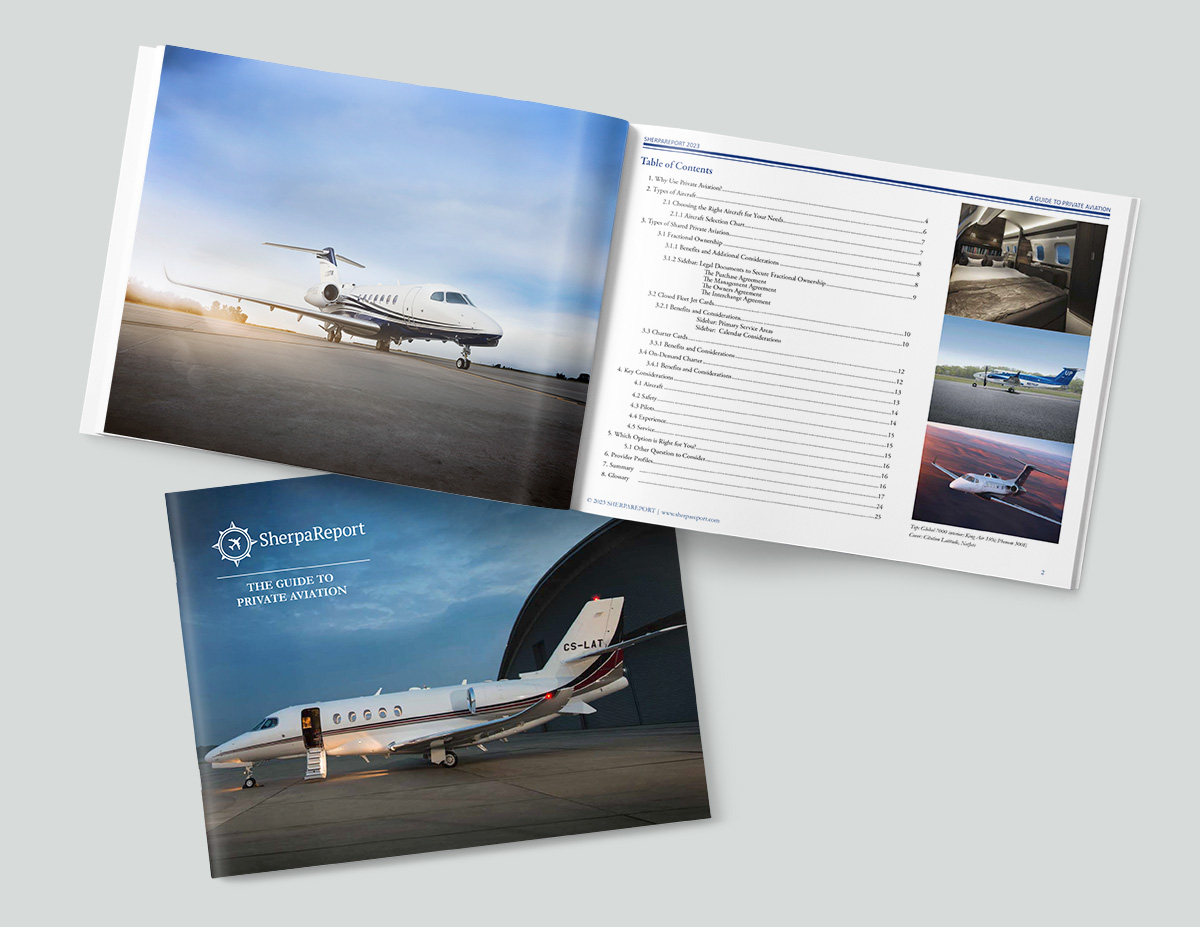
Guide to Private Aviation
To obtain an overview of the different options to access private aviation, including detailed information on charters, jet cards & memberships, fractional ownership, and full ownership, start with our free Guide to Private Aviation. Access the 30 pages of introduction, explanation, comparison and pros and cons to get you up to speed.
Dive deeper into
private aviation alternatives
SherpaReport Membership
Private aviation news


Aircraft News
Magellan Adds Flexibility To Its Jet Cards


Aircraft News
Flyte: A Focused Regional Vision Jet Operator

Aircraft News
How Old Is the Private Jet You Are Flying On?


Aircraft News
NetJets Pauses New Jet Card And Short Lease Sales

Aircraft News
Continued Growth in Private Jet Flights in 2026


